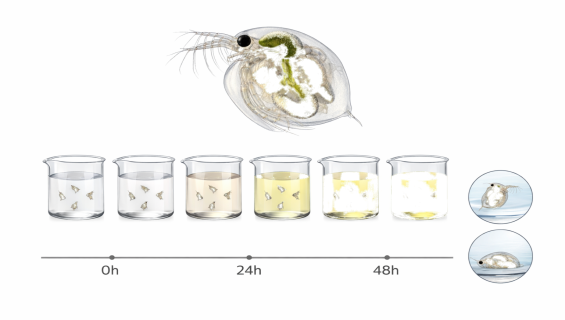
TG 202 Daphnia sp. Acute Immobilisation Test
-
Test Overview:
The OECD TG 202 test is designed to assess the acute toxicity of chemical substances to Daphnia magna Straus. As a primary consumer in freshwater ecosystems, Daphnia serves as a critical indicator species for evaluating potential environmental hazards.
-
Test Principle:
Young daphnids (less than 24 hours old) are exposed to the test substance at a range of concentrations for a period of 48 hours. Immobilisation is recorded at 24 and 48 hours. A daphnid is considered immobilised if it is unable to swim within 15 seconds after gentle agitation of the test vessel.
-
Key Parameters:
-
Median Effective Concentration : The calculated concentration of the test substance which immobilises 50% of the daphnids within 48 hours.
-
NOEC (No Observed Effect Concentration): The highest tested concentration at which no immobilisation is observed.
-
-
Scope of Application:
Industrial chemicals, pesticides, pharmaceuticals, and other substances requiring environmental risk assessment for regulatory compliance.
-
Regulatory Compliance:
Conducted under OECD GLP (Good Laboratory Practice) standards, ensuring that the data is internationally recognized and suitable for regulatory submissions (e.g., REACH, EPA).
- Test species
Daphnia magna
- The objective of this study is evaluation of the toxicity caused by test substance in daphnids. Newborn daphnids will be exposed to at least five different concentrations of test substance. The rates of immobilisation will be record at the end of the experiment. According to these results, the half maximal effective concentration(EC50) or no observed effect concentration (NOEC) at 48 hours will be defined.


