OECD TG-451 — Carcinogenicity Studies
In the pathways of drug development, pesticide registration, and high-volume chemical compliance, determining whether a substance possesses carcinogenic potential is the ultimate challenge for ensuring public safety and clearing regulatory hurdles. OECD TG 451 represents the highest standard in chronic toxicological assessment, precisely identifying tumor-inducing risks through near-lifespan monitoring of experimental animals.
1. Why Does Your Product Require an OECD TG 451 Study?
This is an exhaustive safety validation, typically mandatory in the following critical scenarios:
-
Lifespan Exposure Risk Assessment: For substances with long-term human contact (e.g., food additives, chronic pharmaceuticals, or persistent environmental chemicals), TG 451 is the only scientific path to determine the "No-Observed-Adverse-Effect Level (NOAEL)" and estimate carcinogenic potency.
-
Clarifying Genotoxicity Concerns: When primary genetic toxicity tests (like the Ames Test) show positive results or when sub-chronic studies reveal abnormal cell proliferation, a carcinogenicity study is the final arbiter to determine if these phenomena progress into malignant tumors.
-
Meeting International High-Level Registration Requirements: This study is a statutory requirement for high-risk categories entering markets under EU REACH, US FDA, and global pesticide regulatory agencies.
2. Technical Depth: Rigorous Lifespan Monitoring
The uniqueness of OECD TG 451 lies in its extensive observation timeline and the depth of pathological analysis:
-
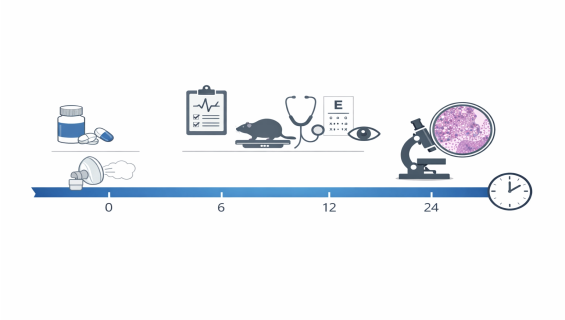
24-Month Observation Period: Usually performed on rodents (rats or mice), the study covers the majority of their lifespan (typically 24 months). This allows for the capture of late-onset carcinogenic effects that emerge during biological aging.
-
Precise Dose-Response Evaluation: By utilizing at least three dose levels, we establish curves correlating dosage with tumor incidence, tumor types, and the time of onset.
-
Comprehensive Histopathological Scanning: Upon study completion, our expert team conducts microscopic examinations of over 40 organs and tissues to identify the nature of benign and malignant neoplasms.
3. Your Premier Regulatory and Testing Partner
Executing OECD TG 451 requires immense laboratory capacity and a team of veteran pathologists. We provide the following values:
-
GLP-Compliant Data Integrity: Over the two-year study period, we ensure the traceability of every data point and the stability of environmental controls. Our reports possess global mutual recognition.
-
Integrated Chronic & Carcinogenicity Studies (TG 453): To save you time and costs, we offer protocols that combine chronic toxicity with carcinogenicity, fulfilling multiple regulatory requirements in a single study.
-
Expert Interpretation of Carcinogenic Mechanisms: We go beyond data delivery. We assist in analyzing the Mode of Action (MoA) to differentiate whether a substance is a direct DNA-reactive carcinogen or a non-genotoxic carcinogen with a defined threshold.
Click to Pay


