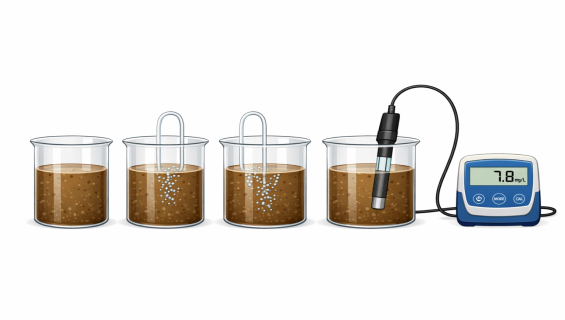
OECD TG-209 — Activated Sludge Respiration Inhibition Test
In the environmental risk assessment of industrial chemicals and pharmaceutical wastewaters, ensuring that a substance does not inhibit microbial bioactivity upon entering wastewater treatment systems is a technical necessity for maintaining ecological balance and regulatory compliance. OECD TG 209 is the globally recognized standard for identifying the toxic effects of substances on "Activated Sludge," providing a vital early warning for potential damage to environmental infrastructure.
1. Why Does Your Product Require an OECD TG 209 Study?
Environmental safety extends beyond aquatic vertebrates. In the following scenarios, OECD TG 209 is a core data requirement for EU REACH registration, SDS preparation, and industrial wastewater discharge standards:
-
Protecting Sewage Treatment Plants (STP): Activated sludge is the "heart" of wastewater treatment. If a substance inhibits microbial respiration, the entire treatment process fails. TG 209 data directly determines the "Inhibition of Sewage Sludge" potential.
-
Determining Concentration for Biodegradability Tests: Before conducting biodegradation studies (e.g., OECD 301 series), TG 209 must be performed to identify non-toxic concentrations, ensuring the validity of subsequent degradation data.
-
GHS Hazard Classification: By calculating inhibition rates, this test provides scientific evidence regarding a product's impact on environmental infrastructure, mitigating legal risks and environmental penalties.
2. Technical Depth: Principles of Respiration Inhibition
The uniqueness of OECD TG 209 lies in its simulation of microbial community dynamics within a real-world wastewater treatment plant:
-
Microbial Community Monitoring: Utilizing activated sludge sourced from municipal or industrial plants, the test monitors "Total Respiration," "Heterotrophic Respiration," and "Nitrification Inhibition" simultaneously.
-
Oxygen Consumption Measurement: Under exposure to the test substance, oxygen consumption curves are recorded continuously over 3 hours using oxygen electrodes. Inhibition rates are calculated by comparing data against control groups.
-
Differentiating Nitrification Inhibition: By adding specific inhibitors (such as ATU), TG 209 allows us to isolate whether a substance is toxic to general heterotrophic bacteria or specifically targets highly sensitive "Nitrifying Bacteria."
Click to Pay


