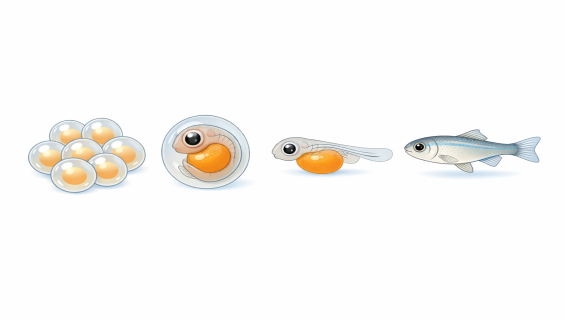
OECD TG-210 — Fish Early-Life Stage (FELS) Toxicity Test
When assessing the long-term impact of chemicals on the environment, understanding acute lethality is not enough. Whether a substance interferes with hatching, growth, or development is the true determinant of a species' population survival. OECD TG 210 is internationally recognized as the most representative "Predictive Model for Chronic Fish Toxicity," capable of detecting subtle impairments caused by trace substances during the most vulnerable stages of life: embryos and larvae.
1. Why Does Your Product Require an OECD TG 210 Study?
OECD TG 210 serves as decisive evidence for EU REACH, US EPA, and various national Environmental Risk Assessments (ERA) in the following scenarios:
-
Defining the No-Observed-Effect Concentration (NOEC): While acute tests only indicate short-term lethality, TG 210 provides the NOEC and LOEC under long-term exposure. These are core parameters for calculating the Predicted No-Effect Concentration ($PNEC$).
-
Assessing Developmental Toxicity & Malformation Risk: Some chemicals are non-lethal at low concentrations but cause skeletal deformities, abnormal yolk sac absorption, or stunted growth. TG 210 captures these "sub-lethal effects" that conventional acute tests miss.
-
A Powerful Alternative to Full Life-Cycle Tests: As a robust screening alternative to the Fish Full Life-Cycle (FLC) test, TG 210 provides highly predictive toxicological data in a shorter timeframe, significantly reducing compliance costs.
2. Technical Depth: Continuous Monitoring of Vulnerable Life Stages
The scientific rigor of OECD TG 210 lies in its coverage of the entire developmental window, from fertilized eggs to independent feeding:
-
Comprehensive Exposure Window: The test begins with fertilized eggs and proceeds through embryonic development and hatching into the larval stage. This lasts approximately 30 days for Zebrafish and 60-90 days for Rainbow Trout.
-
Dynamic Observation Indices: Beyond "Hatching Success" and "Survival Rate," the study precisely quantifies total length, body weight, and malformation rates of the larvae.
-
High-Precision Flow-Through Systems: To ensure constant concentrations and removal of metabolic waste, we utilize sophisticated flow-through dosing apparatuses to simulate continuous and stable exposure pressure in real-world aquatic environments.
Click to Pay


