OECD TG-224 — Anaerobic Inhibition Test
In modern industrial wastewater treatment and renewable energy (biogas) operations, anaerobic bacterial communities are the primary engines converting organic matter into energy. However, anaerobic bacteria are often far more sensitive to chemical insults than aerobic ones. OECD TG 224 provides a standardized procedure to identify whether a substance inhibits methanogenic activity, serving as a technical safeguard against the collapse of industrial wastewater treatment systems.
1. Why Does Your Product Require an OECD TG 224 Study?
When substances enter anaerobic digestion systems via industrial discharge or as waste in anoxic environments, OECD TG 224 is critical for operational safety and regulatory compliance:
-
Preventing Wastewater Treatment System "Poisoning": For pharmaceutical and fine chemical industries, anaerobic treatment is the first line of defense. TG 224 precisely calculates toxicity thresholds for methanogens, preventing system failure caused by chemical additives.
-
Evaluating Biosafety for Biogas Production: In the bioenergy sector, assessing whether raw materials or additives inhibit methane production is essential for maintaining output efficiency.
-
Enhancing Environmental Risk Assessment Dossiers: For chemicals that require toxicity assessment in oxygen-deprived environments (e.g., deep soil or sediments), the methane-inhibition data from TG 224 fills the detection gaps left by conventional aerobic testing.
2. Technical Depth: Principles of Methanogenic Rate and Pressure Sensing
The uniqueness of OECD TG 224 lies in simulating microbial metabolism under extreme anoxic conditions:
-
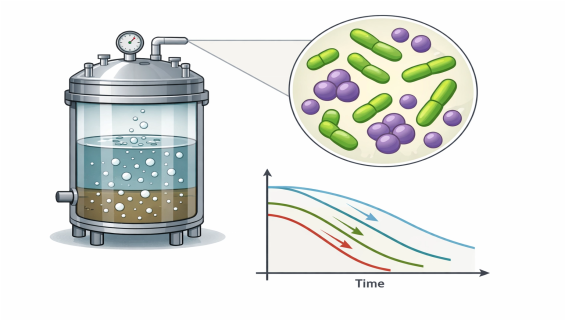
Monitoring Anaerobic Sludge Communities: Utilizing sludge sourced from well-operating anaerobic digesters, the test is conducted in sealed, light-shielded, and strictly oxygen-free environments.
-
Real-time Monitoring of Gas Production (Pressure): Microbial decomposition of substrates produces Methane ($CH_4$) and Carbon Dioxide ($CO_2$), leading to an increase in internal vessel pressure. We use high-precision pressure sensors or volumetric methods to record gas production kinetics under exposure.
-
Calculating Inhibition : By comparing total gas production between test and control groups, we calculate the percentage inhibition of the anaerobic digestion rate caused by the test substance.
Click to Pay


