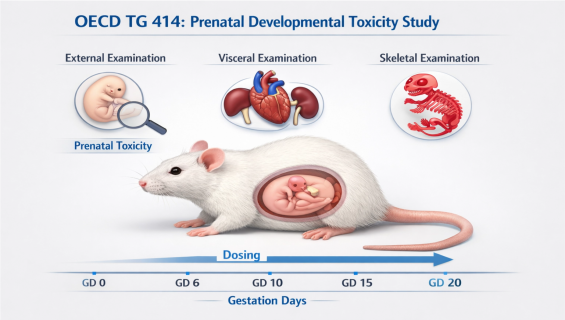
OECD TG 414: Prenatal Developmental Toxicity Study
Ensuring the developmental safety of the next generation is one of the most rigorous aspects of chemical risk assessment. Adhering to OECD TG 414 guidelines and GLP principles, we focus on evaluating the potential effects of test substances on pregnant females and the developing embryo/fetus, providing essential reproductive safety data for your products.
Study Objective
To detect adverse effects of a test substance on pregnant females and the development of the embryo and fetus. The study focuses on embryo/fetal lethality, growth retardation, structural malformations (teratogenicity), and functional/skeletal abnormalities.
Service Highlights & Technical Specifications
-
Critical Dosing Window: Administration occurs during the period of organogenesis to cover the most sensitive stages of prenatal development.
-
High-Resolution Fetal Examination:
-
External Examination: Recording fetal weight, sex, and any external malformations.
-
Visceral Examination: Utilizing specialized sectioning techniques to observe the developmental integrity of thoracic and abdominal organs.
-
Skeletal Examination: Using staining techniques to assess ossification, skeletal variations, or malformations.
-
-
Maternal Toxicity Analysis: Concurrent monitoring of maternal weight gain, food consumption, and clinical signs to differentiate between maternal-mediated effects and direct developmental toxicity.
-
Statistical Rigor: Comprehensive litter-based statistical analysis ensures the scientific validity and regulatory acceptance of the results.
Study Procedure
-
Mating and Grouping: Ensuring synchronized pregnancy and randomized assignment into at least three dose levels and a control group.
-
Exposure Period: Continuous dosing from implantation through the period of organogenesis up to the day before scheduled hysterectomy.
-
Necropsy Evaluation: Maternal examination prior to expected parturition, including counts of corpora lutea, implantation sites, and resorptions.
-
Offspring Characterization: Detailed external, visceral, and skeletal examinations of all viable fetuses.
-
Reporting: Delivery of comprehensive GLP-compliant reports suitable for REACH, FDA, or global pesticide registrations.
Targeted Industries
-
Pre-clinical Pharmaceutical Safety Assessment
-
Pesticide and Agrochemical Registration (Reproductive indicators)
-
High-volume Industrial Chemical Evaluation (REACH Annex IX/X)
-
Food Additive and Nutritional Ingredient Safety Verification
Click to Pay


